
San Antonio Surgical Arts
Wisdom Teeth Removal in San Antonio, TX
Board-certified oral and maxillofacial surgeons removing impacted and problem wisdom teeth for patients across San Antonio and the surrounding Hill Country.
What are wisdom teeth?
Third molars are commonly referred to as wisdom teeth. They are usually the last teeth to develop and are located in the back of your mouth, behind your second molars. Their development is usually completed between the middle teenage years and early twenties, a time traditionally associated with the onset of maturity and the attainment of wisdom.
Why See an Oral Surgeon for Wisdom Teeth?
While a general dentist can perform simple extractions, impacted wisdom teeth often require surgical techniques that are within the specialized scope of an oral and maxillofacial surgeon. Our surgeons routinely manage complex cases involving:
Full Bony Impaction
The tooth is completely encased in jawbone and must be surgically exposed and sectioned for removal. This is the most complex type of impaction and requires an experienced surgical team.
Partial Bony Impaction
The tooth has partially erupted through bone but remains trapped beneath the gum. The exposed portion is vulnerable to infection and decay, making removal the recommended course of action.
Soft Tissue Impaction
The tooth has cleared the bone but remains covered by gum tissue. The flap of gum over the tooth — called an operculum — traps food and bacteria, leading to a painful infection called pericoronitis.
Proximity to the Inferior Alveolar Nerve
Lower wisdom teeth often sit close to the nerve that provides sensation to the lip and chin. Our surgeons use 3D CBCT imaging to map the exact relationship between the roots and the nerve before surgery.
Horizontal or Angled Roots
Roots that curve, hook, or grow horizontally require careful sectioning and surgical technique to remove without fracture. General dentists routinely refer these cases to our practice.
Multiple Simultaneous Extractions
Removing all four wisdom teeth in a single visit under IV sedation is the most efficient approach for most patients, minimizing total recovery time and the number of surgical appointments.
Signs Your Wisdom Teeth May Need to Come Out
Not all wisdom teeth cause immediate symptoms, but that does not mean they are problem-free. Many patients are unaware of developing issues until a routine X-ray reveals impaction, cyst formation, or damage to adjacent teeth. Common warning signs include:
Pain or pressure at the back of the jaw, especially when chewing
Swelling, redness, or tenderness in the gum tissue behind the last molar
Repeated infections in the gum tissue surrounding a partially erupted tooth
Difficulty opening your mouth fully (trismus)
Crowding or shifting of front teeth as wisdom teeth push forward
Decay in the wisdom tooth or the second molar directly in front of it
A cyst or fluid-filled sac forming around an unerupted tooth
Bad breath or an unpleasant taste that does not resolve with brushing
Why Are Wisdom Teeth Removed?
If you do not have enough room in your mouth for your third molars to fully erupt, a number of problems can happen. Impacted wisdom teeth should be removed before their root structure is fully developed. In some patients it is as early as 12 or 13, and in others it may not be until the early twenties. Problems tend to occur with increasing frequency after the age of 30. Some of the possible problems related to not removing your wisdom teeth include:
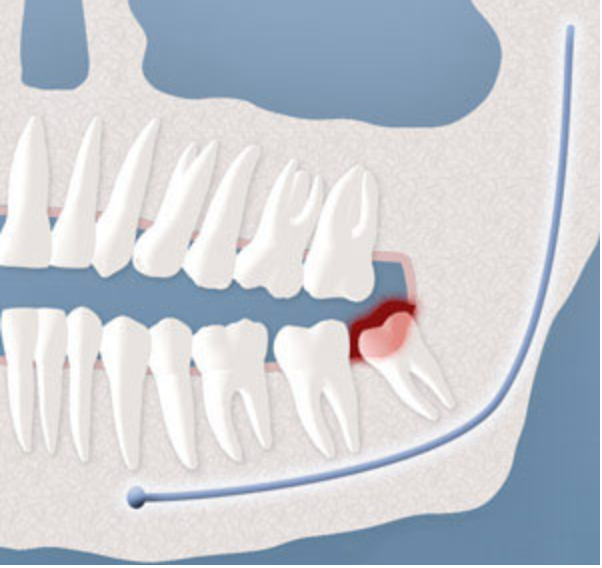
Infection
The most frequent clinical problem we see is pericoronitis, (a localized gum infection). Without enough room for total eruption, the gum tissue around the wisdom tooth can become irritated and infected, resulting in recurrent pain, swelling, and problems with chewing and/or swallowing.
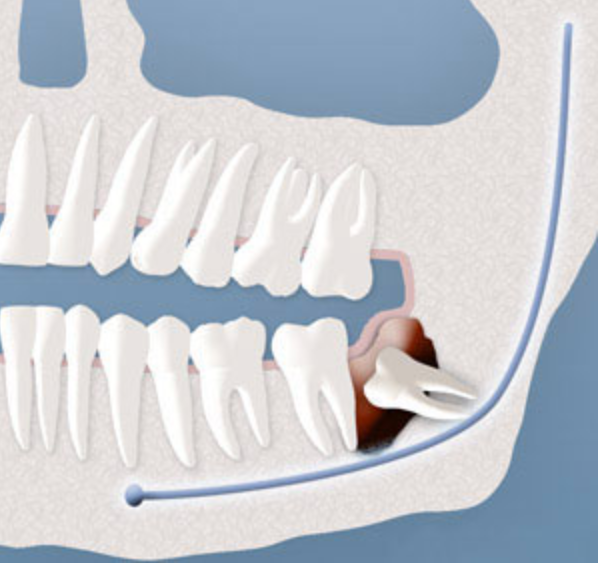
Cyst Formation
Non-infectious diseases may also arise in association with an impacted wisdom tooth. Cysts are fluid-filled "balloons" inside the jaw bone that develop as a result of impacted teeth and slowly expand destroying adjacent jaw bone and occasionally teeth. They can be very difficult to treat if your wisdom teeth are not removed in your teenage years. Although rare, tumors can be associated with the delayed removal of wisdom teeth.
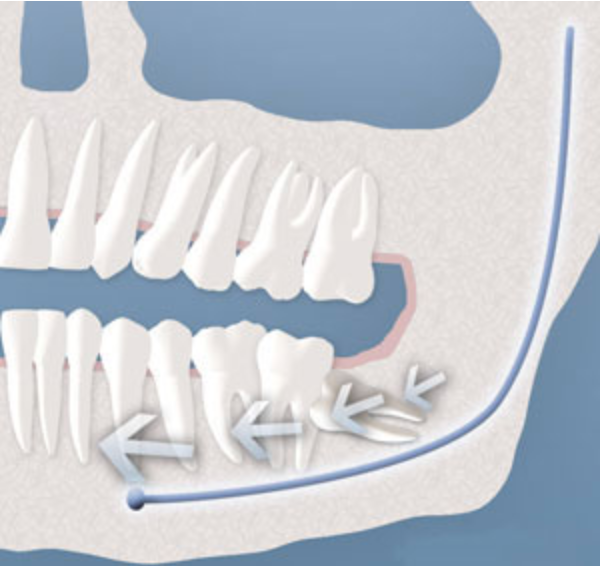
Possible Crowding
Impacted wisdom teeth may contribute to crowding of your teeth. This is most noticeable with the front teeth, primarily the lower front teeth and is most commonly seen after a patient has had braces. There are a number of factors that cause teeth to crowd after braces or in early adulthood. Retained, impacted wisdom teeth may be a contributing factor. Unless you have an active problem when you see the oral surgeon, the reason for removal is primarily to prevent long-term damage to your teeth, gums and jaw bone.
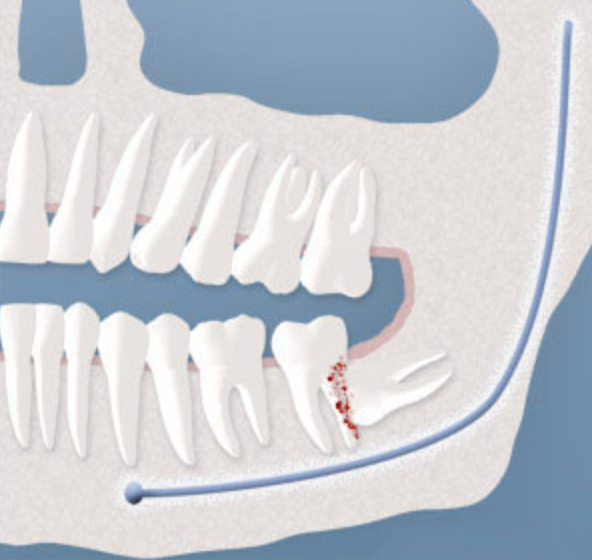
Damage to Adjacent Teeth
If there is inadequate room to clean around the wisdom tooth, the tooth directly in front, the second molar, can be adversely affected resulting in gum disease, bone loss around the tooth, and/or decay.
How We Remove Wisdom Teeth at SASA
San Antonio Surgical Arts combines advanced imaging, multiple anesthesia options, and an on-site accredited surgery center to make your procedure as safe and comfortable as possible.
CBCT 3D Imaging for Nerve Mapping
Before any surgical plan is finalized, our surgeons review a cone-beam CT (CBCT) scan that shows the precise three-dimensional relationship between your wisdom tooth roots and the inferior alveolar nerve. This allows us to anticipate anatomical challenges and choose the safest surgical approach — reducing the risk of post-operative numbness or nerve sensitivity.
IV Sedation and General Anesthesia Options
Most patients choose IV sedation, which produces a comfortable, amnestic state — you will have little or no memory of the procedure. For patients who prefer deeper sedation or whose medical history warrants it, general anesthesia is available in our on-site surgery center. Local anesthesia alone is also an option for straightforward, fully erupted cases.
In-House AAAHC-Accredited Ambulatory Surgery Center
Our on-site ambulatory surgery center (ASC) is accredited by the Accreditation Association for Ambulatory Health Care (AAAHC) — the same standard applied to hospital outpatient departments. This means your procedure takes place in a fully equipped, independently inspected surgical facility without the cost or inconvenience of a hospital visit.
Recovery Overview
Expect mild-to-moderate swelling and soreness for the first two to three days. Most patients manage discomfort with prescription pain medication and over-the-counter anti-inflammatories. A soft diet is recommended for the first week. You will receive detailed written post-operative instructions and a direct line to reach our on-call team if questions arise.
Dry Socket: What to Watch For
Dry socket is the most common post-operative complication, occurring in roughly 2–5% of extractions. It happens when the protective blood clot is lost from the socket before healing is complete, exposing the underlying bone. Symptoms — a dull, throbbing ache that begins three to five days after surgery — are very treatable. Avoid smoking, straws, and vigorous rinsing for the first 72 hours to minimize your risk.
What If They Aren't Extracted as an Adult?
As wisdom teeth develop, the roots become longer and the jaw bone more dense. When it is necessary to remove impacted wisdom teeth in your thirties, forties or beyond, the post-operative course can be prolonged and there is a higher complication rate. Treating these complications is often more difficult and less predictable than with a younger patient. Healing may be slower and the chance of infection can be increased. If your impacted wisdom teeth are not removed in your teenage years or early in your twenties and they are completely impacted in bone, it may be advisable to wait until a localized problem (such as cyst formation or localized gum disease and bone loss) develops. In general, you will heal faster, more predictably and have fewer complications if treated in your teens or early twenties.
What's the Cost and Insurance Coverage?
The fee for your treatment is determined by a number of factors. These may include the difficulty involved in removing your teeth and which type of anesthesia is best for you. During your consultation appointment, the surgeon will need to review your x-rays, complete an examination and determine the best option for anesthesia, before an accurate estimate can be provided. Every insurance company has a different policy regarding the extent of coverage for a given surgical procedure. The oral surgeon's office staff will help you obtain maximum insurance coverage for your treatment.
Frequently Asked Questions
Related Topics
Schedule Your Wisdom Teeth Consultation
If you or your child has been referred for wisdom tooth removal, or if you are experiencing pain at the back of your jaw, contact one of our three San Antonio-area offices. We will evaluate your X-rays, explain your options, and schedule your procedure at a time that works for you.
Request a Consultation